
TL;DR — Quick Answer
- Commercial glazing covers shopfronts, office fit-outs, strata common property, schools, retail, and multi-unit residential. It is not just large-scale curtain walls.
- The key difference between residential and commercial glazing is not the size of the job. It is the glass specification, Australian Standards compliance, site access complexity, and how the work is coordinated around tenants and building schedules.
- Property managers and strata managers are responsible for common-property glazing under the Strata Schemes Management Act 2015 (NSW). A failed or damaged pane on common property is not the lot owner’s responsibility to fix.
- Before getting a quote, have ready: the glass dimensions, the current glass specification (toughened, laminated, single or double glazed), site access details, and whether work must happen outside business hours.
- For strata and multi-unit buildings, a glazier who can assess multiple panels in one visit and invoice by scheme significantly reduces your administrative load.
- Everclear handles commercial glazing across Greater Sydney, including shopfronts, office fit-outs, strata projects and schools, working to your schedule, after-hours where required.
Commercial glazing in Sydney covers a wider range of situations than most people assume, from a smashed shopfront panel after a break-in to a multi-unit strata building with fogged common-property windows. If you’re a property manager, strata manager, or builder, understanding the process before you call a glazier saves time, avoids misunderstandings, and gets the job sorted faster.
This guide gives you a plain-English rundown: what commercial glazing actually covers, what Australian Standards apply, who’s responsible for what in a strata scheme, and what to have ready before you pick up the phone.
What Does Commercial Glazing Actually Cover?
Most property managers and builders know they need a commercial glazier. Fewer know exactly what falls under that label.
Commercial glazing means any glazing work in a non-residential or mixed-use building context. In practice, that covers:
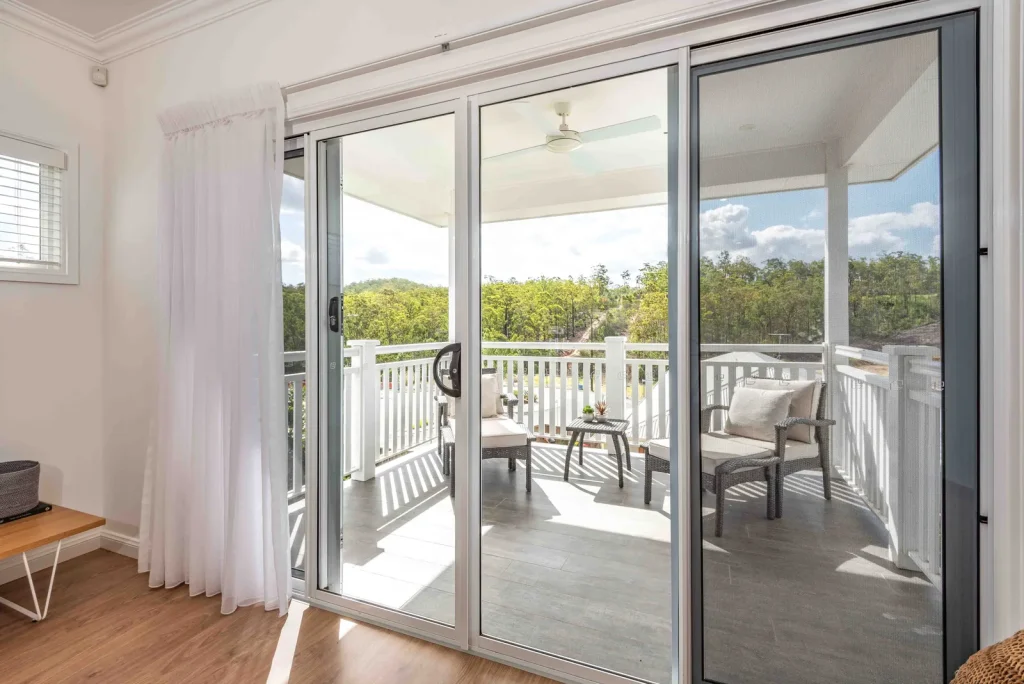
- Shopfronts and retail windows, including emergency boarding and replacement after break-ins or storm damage
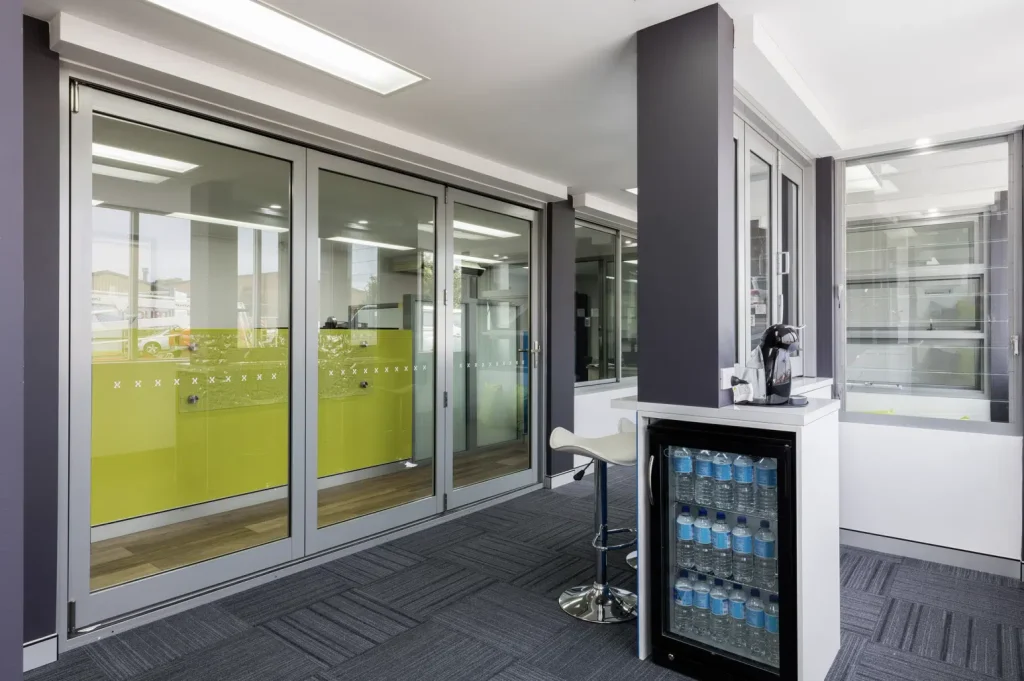
- Office fit-outs and glass partitions, frameless and framed, including commercial glass doors
- Strata common-property glazing: corridor panels, lobby glass, shared balcony balustrades, stairwell windows
- Schools, aged care facilities, medical centres, and hospitality venues
- Industrial and warehouse glazing: roof lights, safety panels, and specialist fire-rated glass
The distinction between residential and commercial work is about the glass specification required, the complexity of site access, and the coordination that goes into working around tenants, business hours, and other trades. A shopfront replacement for a two-person business is commercial glazing, while a single apartment in a 60-unit block is residential glazing, even if the block is large.
Everclear’s glass and glazing services cover both residential and commercial work from the same in-house team, including emergency response, planned replacements, insurance claims, and fit-out supply and install.
What Australian Standards Apply to Commercial Glazing?
Compliance is where commercial glazing differs most from a residential repair. Understanding the relevant standards helps you ask the right questions at quote stage and know what documentation to expect at handover.
AS1288 — Glass in Buildings: Selection and Installation
This is the primary Australian Standard for glazing selection and installation. It specifies which glass type must be used in which situation, based on the panel’s dimensions, its location (human impact zone versus non-impact zone), and the building’s use classification. A standard office window positioned above a non-pedestrian zone has different requirements from a full-height glass wall in a lobby. AS1288 determines the specification, and the glazier applies it.
AS2208 — Safety Glass for Buildings
AS2208 defines the performance requirements for safety glass, covering toughened, laminated, and wired glass. Safety glass is required in human impact zones: doors, sidelights, low windows, frameless partitions, and any panel where a person could reasonably fall against the glass.
Using non-compliant glass in these locations creates a direct WHS and liability exposure for the building owner or manager. A licensed commercial glazier will specify the correct type and supply the relevant compliance confirmation.
For more on how glass type affects what you can and can’t repair, see our guide on whether a cracked glass panel can be repaired.
AGWA Accreditation
The Australian Glass and Window Association (AGWA) accredits glaziers who demonstrate compliance with AS1288 and AS2047, the standard for windows and external glazed doors.
An AGWA-accredited glazier supplies products independently tested across six performance criteria and can provide documentation confirming AS compliance for handover, insurance, and DA/CC purposes. Everclear is an AGWA member.
For commercial projects that need to go through development approval or insurance assessment, ask your glazier at quote stage for the AS specification of the replacement glass, the product warranty, and written compliance confirmation. A credible commercial glazier provides this as standard.
Who Is Responsible for Glazing in a Strata Building?
The general rule under the Strata Schemes Management Act 2015 (NSW): The owners corporation is responsible for the repair and maintenance of common property. Common property generally includes the building’s external envelope, shared corridors, lobbies, lift lobbies, and common-area glazing.
Lot owners are responsible for fixtures and fittings within their own lot, including interior windows and glass that forms part of the lot’s internal fitout rather than the building’s structure.
What this looks like in practice:
- A smashed panel in a shared corridor: common property. Owners corporation responsibility.
- A fogged double-glazed unit in a bedroom window of an individual apartment: depends on whether the window is part of the common property. Typically, the structural frame and external glass are common property. Check the scheme’s strata plan and by-laws.
- A damaged shopfront panel in a mixed-use ground-floor commercial lot: generally the lot owner’s responsibility, unless the shopfront forms part of the building’s external facade and is listed as common property in the strata plan.
- Balcony balustrades: usually common property, even when they are only accessible from a single lot.
For strata managers dealing with urgent safety situations, the owners corporation can act immediately to board and secure a broken panel. The committee can resolve financial responsibility at the next meeting. Waiting for a committee decision while broken glass creates a safety hazard is not the right call.
Everclear can work directly with strata managers and owners corporations, invoice by scheme, and handle multiple sites in a single week. For window repairs across Sydney on common-property panels, the process is straightforward: assess, quote, install, document.
Note: The above is general guidance based on the Act and standard strata practice. For a specific scheme’s responsibility breakdown, always refer to the registered strata plan and the scheme’s by-laws.
What Do You Need Before Getting a Commercial Glazing Quote?
Have the following ready before you call:
- The glass dimensions. Measure the height and width of the damaged or replacement panel in millimetres. For non-standard openings or shaped panels, a site measure is recommended before ordering. Guessing dimensions on a custom toughened panel adds lead time and cost.
- The glass specification. Note what type of glass is currently installed if you can: single or double glazed, toughened, laminated, or standard float glass. The specification is often etched on the corner of the glass panel. If you can’t identify it, the glazier will confirm on-site.
- The building use and panel location. Is this a shopfront, a shared corridor, an office partition, a school classroom? Is the panel in a human impact zone, meaning could someone walk into it or fall against it? These answers determine the required AS specification and influence fabrication lead time.
- Site access details. Is there a site induction requirement? Does the building have specific contractor access windows? Is scaffolding or a boom lift required for an upper-floor panel? Does the work need to happen outside business hours to avoid disrupting tenants or building operations? Raise these at quote stage, not after booking.
- Whether it’s an insurance claim. If the damage is insurable, the glazier may be able to coordinate directly with your insurer, handling the quote, documentation, and correspondence. Have your policy number and claim reference ready. Everclear handles insurance claims directly for both commercial and strata properties.
- The urgency. If the panel is broken and the opening is unsecured, say so immediately. Emergency boarding and same-day securing are available around the clock. This is not the same lead time or process as a planned replacement, and you should not be waiting in a queue behind non-urgent jobs when you have a security exposure.
How Does Commercial Glazing Work Around Business Hours and Tenants?
Residential glaziers often work standard hours and expect free access, but commercial glazing does not always get either.
There are three common scenarios:
Planned replacement with no access restrictions. The glazier measures, orders the glass to specification, and schedules installation on a date that suits the building. Standard toughened or laminated glass in common sizes can typically be supplied and fitted within a week. Custom sizes and AS-specification architectural glass may require additional fabrication time depending on the panel dimensions and specification.
Planned replacement with tenant or occupant constraints. The glazier works to a schedule agreed in advance with the property manager or builder. In practice, this often means early morning starts before tenants arrive, after-hours installation, or staged work across multiple sessions to maintain partial building access throughout. This must be raised at quote stage. Everclear works after-hours for commercial jobs where required, but it needs to be scoped and confirmed before the job is booked.
Emergency boarding and replacement. Where a panel is broken and the opening is unsecured, the first priority is safety and security. Emergency boarding, a temporary secure panel installed over the opening, is available 24/7. Once the opening is secured, the permanent glass replacement is scheduled. For standard commercial glass sizes, the permanent replacement can usually be completed the next business day after overnight boarding.
For sliding door repair and replacement on common-property commercial doors, the same after-hours and emergency availability applies.
What Glass Types are Used in Commercial Glazing?
Understanding what you’re specifying helps you have a more informed conversation at quote stage and ask the right questions about what’s going on in your building.
Toughened (tempered) glass is 4-5 times stronger than standard float glass and fractures into small, relatively harmless fragments rather than sharp shards. Required by AS1288 and AS2208 in human impact zones. It is the standard choice for shopfronts, commercial glass doors, sidelights, and most common commercial glazing applications. For a deeper look at glass strength comparisons, see our guide on what type of glass is strongest.
Laminated glass is two or more glass layers bonded with a PVB interlayer. When broken, the interlayer holds the fragments in place. Required in overhead glazing situations (skylights, sloped panels) and where fall-through is a risk, such as high balustrades and structural glass panels. Also specified for acoustic reduction and security applications in offices and commercial premises.
Double-glazed units (IGU) are two glass panels sealed with an air or argon-filled gap. They provide thermal insulation and acoustic reduction. Common in commercial buildings targeting energy efficiency ratings or noise control. The inner and outer panes can be toughened or laminated depending on the panel’s location and use.
For most standard commercial glazing applications, including shopfronts, office partitions, and strata common-area windows, toughened safety glass is the default. A licensed commercial glazier will specify the correct type for your application based on AS1288 and the panel’s specific location.
Frequently Asked Questions About Commercial Glazing in Sydney
Ready to Discuss a Commercial Glazing Project?
If you have a commercial glazing project, a strata scheme that needs attention, or a shopfront that needs securing today, contact Everclear at 1300 854 726 directly. We’ll assess your scope, confirm the glass specification, and give you a written quote with a clear timeline. No runaround.